Buy eurolingvija.eu ?
We are moving the project
eurolingvija.eu .
Are you interested in purchasing the domain
eurolingvija.eu ?
domain@kv-gmbh.de · 0541-91531010
Buy eurolingvija.eu ?
What are the criteria for intensive care?
Intensive care is typically reserved for patients who require close monitoring and specialized treatment due to severe illness or injury. The criteria for intensive care include unstable vital signs, the need for mechanical ventilation, organ failure, or the need for continuous intravenous medications. Patients who are at high risk of deterioration or who have undergone major surgeries may also be admitted to the intensive care unit for close monitoring and management. The goal of intensive care is to provide the highest level of medical care and support to help stabilize and improve the patient's condition. **
How many visitors in the intensive care unit?
The number of visitors allowed in the intensive care unit varies depending on the hospital's policies and the patient's condition. Typically, only immediate family members are allowed to visit ICU patients, and the number of visitors may be limited to one or two at a time. This is to ensure the patient's rest and privacy are maintained, as well as to minimize the risk of spreading infections in the ICU setting. It is best to check with the hospital staff or the patient's healthcare team for specific guidelines on visitation in the ICU. **


Similar search terms for RYOR-Intensive-Care-depigmentation
Top-Angebote
Products related to RYOR-Intensive-Care-depigmentation:
-
Elsevier Children in Intensive Care: A Survival GuideWritten in a friendly, no-nonsense, style, Children in Intensive Care is a quick reference guide to the management of the acutely ill child in the hospital, or pre-hospital, setting. Fully updated throughout and rich with useful 'Alert' boxes and tables - to make learning and reference easy - this handy publication covers a broad range of essential topics such as drug dosages and compatibilities and normal reference ranges as well as harder to find information such as chest X-ray interpretation and troubleshooting technical equipment. Compiled from daily 'on the job' collation of useful facts and figures, this manual also offers practical advice about important non-acute issues such as infection control, common childhood diseases and child protection as well as new findings on the management of sepsis, the collapsed child and care of the child following spinal surgery. With over 10,000 copies sold, this book is an absolute must for any clinician involved with the management of critically ill children, whether it be on the wards, in theatres, high-dependency or intensive care units, as well as during retrieval and in A&E. Information presented in quick reference format, with accompanying reference tables, to facilitate on-the-spot usage Advanced Life Support Group algorithms provide safe and easy-to-follow protocols to the management of emergency situations Contains input from a broad range of paediatric specialists - intensivists, anaesthetists, haematologists, oncologists, air ambulance physicians and retrieval nurses, pharmacists, specialist dieticians, and respiratory physiotherapists - to ensure full coverage and accuracy of information Contains helpful 'Quick Guide' and 'Warning' boxes to provide key information at a glance, while helpful mnemonics assist with learning Contains chapters on normal child development, safe-guarding children and young people, and patient transport Perfect for use on the wards, theatres, high-dependency units and intensive care units as well as during retrieval and A&E Ideal for newcomers and experienced staff alike, whether they be junior doctors or nursing staff Additional authorship brings the expertise of Marilyn McDougall, a Senior Paediatric Intensive Care Consultant Contains brand new chapters - oncology emergencies and pain & sedation - as well as the latest information on topics including sepsis and the collapsed neonate, and care of children after spinal surgery Comprehensively expanded cardiac chapter presents new surgical approaches as well as practical tips on pacing, care of chest drains and basic echocardiograph terminology Drug chapter now includes reversal agents, new drug profiles and an updated compatibilities chart Expanded artwork program explains clinical concepts and practical procedures22,95 £*Shipping: 2,99 £Secure redirect to the provider
-
Uplift Essentials Organic Sugar Lip Scrub Intensive Mint Refresh & Smoothing Lip Care Organic Sugar Lip Scrub Intensive Mint Refresh & Smoothing Lip CareElevate your skincare routine with this Organic Sugar Lip Scrub Cream, a professionalgrade treatment designed to rescue and revitalize your smile. Formulated with natural exfoliants and a cooling mint infusion, this scrub provides a deep...34,97 $*Shipping: 0,00 $Secure redirect to the provider
-
Rare Purchases Vaseline Intensive Hand Cream Moisturizing Lotion, Hydrating Nourishing Repairing Hands Care, Beauty Skincare Hand Cream Vaseline Intensive Hand Cream Moisturizing Lotion, Hydrating Nourishing Repairing Hands Care, Beauty Skincare Hand CreaDeep Hydration and Repair for Your Hands Discover the trusted care of Vaseline Intensive Hand Cream Moisturizing Lotion, designed to deliver longlasting hydration and nourishment. Whether you face daily dryness, rough patches, or chapped skin, this...21,97 $*Shipping: 0,00 $Secure redirect to the provider




-
How long in intensive care after colon surgery?
The length of time a patient spends in intensive care after colon surgery can vary depending on the individual's specific condition and the complexity of the surgery. On average, patients may spend 1-3 days in the intensive care unit (ICU) following colon surgery. However, some patients may require a longer stay in the ICU if they experience complications or have underlying health issues. It is important for the medical team to closely monitor the patient's condition during this critical post-operative period. **
-
Why are there too few intensive care nurses?
There are too few intensive care nurses due to a combination of factors. The demanding nature of the job, including long hours and high stress levels, can lead to burnout and turnover. Additionally, the specialized skills and training required for intensive care nursing can make it challenging to recruit and retain qualified professionals. Finally, the increasing demand for intensive care services, particularly during the COVID-19 pandemic, has put additional strain on an already limited pool of intensive care nurses. **
-
How does one become an intensive care nurse?
To become an intensive care nurse, one typically needs to first become a registered nurse by completing a nursing program and passing the NCLEX-RN exam. After gaining some experience in a general nursing setting, individuals can then pursue additional training and certification in critical care nursing. This may involve completing a critical care nursing program, gaining experience working in an intensive care unit, and passing a certification exam such as the CCRN. Continuous education and training are also important to stay current in the field of intensive care nursing. **
-
Do hospitals receive money for providing intensive care beds?
Yes, hospitals do receive money for providing intensive care beds. In the United States, hospitals are reimbursed for intensive care services through a combination of private insurance payments, government programs like Medicare and Medicaid, and out-of-pocket payments from patients. The amount of money hospitals receive for providing intensive care beds can vary depending on the type of insurance coverage the patient has and the specific services provided. **

Why is grandma suddenly in the intensive care unit?
Grandma is suddenly in the intensive care unit because she experienced a severe heart attack. The heart attack caused a significant decrease in blood flow to her heart, leading to serious complications that require close monitoring and specialized care in the ICU. The medical team is working to stabilize her condition and provide the necessary treatments to help her recover. **
Is there a bathroom in the intensive care unit?
Yes, there is typically a bathroom in the intensive care unit (ICU) for both patients and staff to use. This is important for the convenience and comfort of patients who may be confined to their beds and need access to a bathroom. Additionally, it is essential for the healthcare staff working in the ICU to have easy access to restroom facilities during their long shifts. **
Top-Angebote
Products related to RYOR-Intensive-Care-depigmentation:
-
La Biosthetique SPA - Intensive Hand Care 50mlWere always using our hands, however that leads to a problem. The skin on the back of our hands is very thin and hardly contains any fatty tissue, it quickly becomes dry and chapped. Frequent hand washing makes the skin dry out even more and disturbs its natural protective barrier. With rich moisture valuable lipids from vipers bugloss and sunflower oil and a pure plant based extract, Intensive Hand Care stabilises the fragile barrier layer of stressed skin and supports its natural protection mechanisms. Panthenol and allantoin calm stressed skin and support its regeneration, while valuable phytosterols from balloon vine prevent inflammatory skin reactions. With Intensive Hand Care and some special attention, skin that is stressed and dry will become soft and silky in no time at all and have a fresh citrus scent. Ingredients: AQUA (WATER), PETROLATUM, PARAFFINUM LIQUIDUM (MINERAL OIL), GLYCERIN, GLYCERYL STEARATE, STEARIC ACID, PALMITIC ACID, CETEARYL ALCOHOL, PEG-5 GLYCERYL STEARATE, CETEARETH-12, INULIN, ALPHA-GLUCAN OLIGOSACCHARIDE, ECHIUM PLANTAGINEUM SEED OIL, CARDIOSPERMUM HALICACABUM FLOWER/LEAF/VINE EXTRACT, HELIANTHUS ANNUUS (SUNFLOWER) SEED OIL UNSAPONIFIABLES, PANTHENOL, SODIUM LACTATE, ALLANTOIN, TOCOPHEROL, OCTYLDODECANOL, TROMETHAMINE, PHENOXYETHANOL, BENZOIC ACID, DEHYDROACETIC ACID, PARFUM (FRAGRANCE), LIMONENE, CITRAL, LINALOOL, COUMARIN15,50 £*Shipping: 2,95 £Secure redirect to the provider
-
Jessica Nails Jessica Critical Care - Intensive Care for Soft Nails 14.8mlDiscover for yourself how beautiful your nails can be with the assistance of treatments from the foremost authority on natural nail care. Jessica Nails have created a system of natural nail care unparalleled in its beauty and efficacy. The Jessica System is the first word in nail care for celebrities, starlets, journalists and luminaries around the world.21,50 £*Shipping: 2,95 £Secure redirect to the provider
-
Elsevier Children in Intensive Care: A Survival GuideWritten in a friendly, no-nonsense, style, Children in Intensive Care is a quick reference guide to the management of the acutely ill child in the hospital, or pre-hospital, setting. Fully updated throughout and rich with useful 'Alert' boxes and tables - to make learning and reference easy - this handy publication covers a broad range of essential topics such as drug dosages and compatibilities and normal reference ranges as well as harder to find information such as chest X-ray interpretation and troubleshooting technical equipment. Compiled from daily 'on the job' collation of useful facts and figures, this manual also offers practical advice about important non-acute issues such as infection control, common childhood diseases and child protection as well as new findings on the management of sepsis, the collapsed child and care of the child following spinal surgery. With over 10,000 copies sold, this book is an absolute must for any clinician involved with the management of critically ill children, whether it be on the wards, in theatres, high-dependency or intensive care units, as well as during retrieval and in A&E. Information presented in quick reference format, with accompanying reference tables, to facilitate on-the-spot usage Advanced Life Support Group algorithms provide safe and easy-to-follow protocols to the management of emergency situations Contains input from a broad range of paediatric specialists - intensivists, anaesthetists, haematologists, oncologists, air ambulance physicians and retrieval nurses, pharmacists, specialist dieticians, and respiratory physiotherapists - to ensure full coverage and accuracy of information Contains helpful 'Quick Guide' and 'Warning' boxes to provide key information at a glance, while helpful mnemonics assist with learning Contains chapters on normal child development, safe-guarding children and young people, and patient transport Perfect for use on the wards, theatres, high-dependency units and intensive care units as well as during retrieval and A&E Ideal for newcomers and experienced staff alike, whether they be junior doctors or nursing staff Additional authorship brings the expertise of Marilyn McDougall, a Senior Paediatric Intensive Care Consultant Contains brand new chapters - oncology emergencies and pain & sedation - as well as the latest information on topics including sepsis and the collapsed neonate, and care of children after spinal surgery Comprehensively expanded cardiac chapter presents new surgical approaches as well as practical tips on pacing, care of chest drains and basic echocardiograph terminology Drug chapter now includes reversal agents, new drug profiles and an updated compatibilities chart Expanded artwork program explains clinical concepts and practical procedures22,95 £*Shipping: 2,99 £Secure redirect to the provider
-
Uplift Essentials Organic Sugar Lip Scrub Intensive Mint Refresh & Smoothing Lip Care Organic Sugar Lip Scrub Intensive Mint Refresh & Smoothing Lip CareElevate your skincare routine with this Organic Sugar Lip Scrub Cream, a professionalgrade treatment designed to rescue and revitalize your smile. Formulated with natural exfoliants and a cooling mint infusion, this scrub provides a deep...34,97 $*Shipping: 0,00 $Secure redirect to the provider
-
What are the criteria for intensive care?
Intensive care is typically reserved for patients who require close monitoring and specialized treatment due to severe illness or injury. The criteria for intensive care include unstable vital signs, the need for mechanical ventilation, organ failure, or the need for continuous intravenous medications. Patients who are at high risk of deterioration or who have undergone major surgeries may also be admitted to the intensive care unit for close monitoring and management. The goal of intensive care is to provide the highest level of medical care and support to help stabilize and improve the patient's condition. **
-
How many visitors in the intensive care unit?
The number of visitors allowed in the intensive care unit varies depending on the hospital's policies and the patient's condition. Typically, only immediate family members are allowed to visit ICU patients, and the number of visitors may be limited to one or two at a time. This is to ensure the patient's rest and privacy are maintained, as well as to minimize the risk of spreading infections in the ICU setting. It is best to check with the hospital staff or the patient's healthcare team for specific guidelines on visitation in the ICU. **
-
How long in intensive care after colon surgery?
The length of time a patient spends in intensive care after colon surgery can vary depending on the individual's specific condition and the complexity of the surgery. On average, patients may spend 1-3 days in the intensive care unit (ICU) following colon surgery. However, some patients may require a longer stay in the ICU if they experience complications or have underlying health issues. It is important for the medical team to closely monitor the patient's condition during this critical post-operative period. **
-
Why are there too few intensive care nurses?
There are too few intensive care nurses due to a combination of factors. The demanding nature of the job, including long hours and high stress levels, can lead to burnout and turnover. Additionally, the specialized skills and training required for intensive care nursing can make it challenging to recruit and retain qualified professionals. Finally, the increasing demand for intensive care services, particularly during the COVID-19 pandemic, has put additional strain on an already limited pool of intensive care nurses. **
Similar search terms for RYOR-Intensive-Care-depigmentation
-
Rare Purchases Vaseline Intensive Hand Cream Moisturizing Lotion, Hydrating Nourishing Repairing Hands Care, Beauty Skincare Hand Cream Vaseline Intensive Hand Cream Moisturizing Lotion, Hydrating Nourishing Repairing Hands Care, Beauty Skincare Hand CreaDeep Hydration and Repair for Your Hands Discover the trusted care of Vaseline Intensive Hand Cream Moisturizing Lotion, designed to deliver longlasting hydration and nourishment. Whether you face daily dryness, rough patches, or chapped skin, this...21,97 $*Shipping: 0,00 $Secure redirect to the provider
-
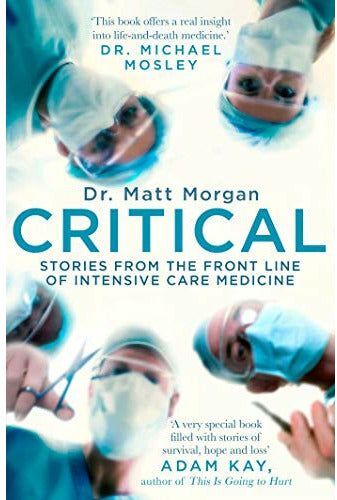
Simon & Schuster Critical: Stories from the front line of intensive care medicine by Dr Matt MorganThere is no room for error in the ICU. Full focus is required at all times.It can be the difference between life and death. Through the remarkable stories of his patients, Dr. Matt Morgan guides you through the body and its organs. He explains how various critical conditions arise, and all that goes into treating them – from the science, research and technology, to the tireless efforts of the doctors and nurses. This book gives you powerful insights about intensive care, many of which may prevent you, or those close to you, from ending up there. It will even teach you how to save a life. Movingly and compassionately, Matt writes about the cases and the people that have stayed with him, both the recoveries and the losses. This book shows the fragility of life, but also the incredible resilience of the human body and spirit. Sometimes darkness can show you the light.4,99 £*Shipping: 1,99 £Secure redirect to the provider
-
StayWell Intensive Stain Removal Toothpaste Cleansing Foam Intensive Stain Removal Toothpaste Cleansing FoamDo your dirty and stained teeth don't let you smile impressively If so, this Intensive Stain Removal Toothpaste Cleansing Foam is for you. Simply brush your teeth with this foam and get them free from dirty stains and yellowness. This cleaning foam...24,97 $*Shipping: 0,00 $Secure redirect to the provider
-
How does one become an intensive care nurse?
To become an intensive care nurse, one typically needs to first become a registered nurse by completing a nursing program and passing the NCLEX-RN exam. After gaining some experience in a general nursing setting, individuals can then pursue additional training and certification in critical care nursing. This may involve completing a critical care nursing program, gaining experience working in an intensive care unit, and passing a certification exam such as the CCRN. Continuous education and training are also important to stay current in the field of intensive care nursing. **
-
Do hospitals receive money for providing intensive care beds?
Yes, hospitals do receive money for providing intensive care beds. In the United States, hospitals are reimbursed for intensive care services through a combination of private insurance payments, government programs like Medicare and Medicaid, and out-of-pocket payments from patients. The amount of money hospitals receive for providing intensive care beds can vary depending on the type of insurance coverage the patient has and the specific services provided. **
-
Why is grandma suddenly in the intensive care unit?
Grandma is suddenly in the intensive care unit because she experienced a severe heart attack. The heart attack caused a significant decrease in blood flow to her heart, leading to serious complications that require close monitoring and specialized care in the ICU. The medical team is working to stabilize her condition and provide the necessary treatments to help her recover. **
-
Is there a bathroom in the intensive care unit?
Yes, there is typically a bathroom in the intensive care unit (ICU) for both patients and staff to use. This is important for the convenience and comfort of patients who may be confined to their beds and need access to a bathroom. Additionally, it is essential for the healthcare staff working in the ICU to have easy access to restroom facilities during their long shifts. **
* All prices are inclusive of VAT and, if applicable, plus shipping costs. The offer information is based on the details provided by the respective shop and is updated through automated processes. Real-time updates do not occur, so deviations can occur in individual cases. ** Note: Parts of this content were created by AI.