Buy eurolingvija.eu ?
We are moving the project
eurolingvija.eu .
Are you interested in purchasing the domain
eurolingvija.eu ?
domain@kv-gmbh.de · 0541-91531010
Buy eurolingvija.eu ?
How hot does a propane burner get?
A propane burner can reach temperatures of up to 3,600 degrees Fahrenheit (1,982 degrees Celsius). This high heat output makes propane burners ideal for various applications such as cooking, welding, and blacksmithing. It is important to use caution and follow safety guidelines when operating a propane burner to prevent accidents or injuries. **
What happens when propane-1-ol reacts with copper oxide?
When propane-1-ol reacts with copper oxide, a redox reaction takes place. The copper oxide is reduced to copper metal, while the propane-1-ol is oxidized to form carbon dioxide and water. This reaction is exothermic, meaning it releases heat energy. Overall, the reaction results in the formation of copper metal, carbon dioxide, and water. **

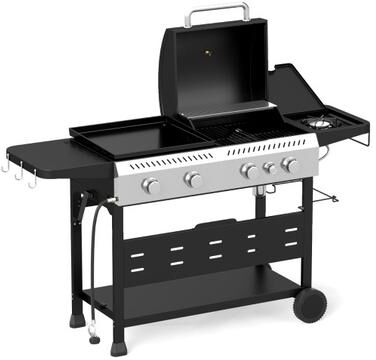
Similar search terms for Costway-1-Burner-Propane
Top-Angebote
Products related to Costway-1-Burner-Propane:
-
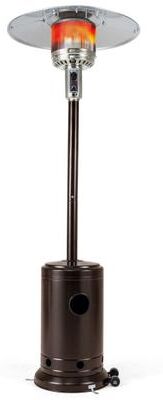
Costway 44.5 Inch Propane Fire Pit Table Rattan Gas 2-in-1 with Stainless Steel Burner-BrownDouble the function, double the enjoyment with this multi-functional propane fire pit table, designed to seamlessly blend heating efficiency and style.199,99 $*Shipping: 0,00 $Secure redirect to the provider



-
How does the combustion of 1 mole of propane proceed in chemistry?
The combustion of 1 mole of propane (C3H8) proceeds through a chemical reaction where propane reacts with oxygen (O2) to produce carbon dioxide (CO2) and water (H2O). The balanced chemical equation for this reaction is: C3H8 + 5O2 → 3CO2 + 4H2O. This means that for every mole of propane combusted, 5 moles of oxygen are required to completely oxidize the propane into carbon dioxide and water. This reaction is exothermic, meaning it releases heat energy as a byproduct. **
-
How much H2O is produced when I burn 1 kg of propane?
When 1 kg of propane is burned, it produces approximately 2.2 kg of water (H2O). This is because the chemical reaction of burning propane (C3H8 + 5O2 -> 3CO2 + 4H2O) results in the formation of water molecules as a byproduct. Therefore, the amount of water produced is directly related to the amount of propane burned. **
-
How much energy is released during the combustion of 1 mole of propane?
The combustion of 1 mole of propane releases approximately 2220 kJ of energy. This is because the combustion of propane (C3H8) involves the reaction with oxygen to produce carbon dioxide and water, releasing a significant amount of heat in the process. This energy release is what makes propane a valuable fuel for heating and cooking applications. **
-
Why does propane react with chlorine to form 2-chloropropane instead of 1-chloropropane?
Propane reacts with chlorine to form 2-chloropropane instead of 1-chloropropane because of the relative stability of the resulting carbocation intermediates. When propane reacts with chlorine, the first step is the formation of a carbocation intermediate. In the case of 2-chloropropane, the resulting secondary carbocation is more stable than the primary carbocation that would form in the case of 1-chloropropane. This increased stability of the secondary carbocation makes the formation of 2-chloropropane more favorable. **
How many grams of propane correspond to 0.2 moles of propane?
To find the number of grams of propane corresponding to 0.2 moles, we can use the molar mass of propane. The molar mass of propane is 44.1 grams per mole. Therefore, 0.2 moles of propane would correspond to 0.2 moles * 44.1 grams/mole = 8.82 grams of propane. **
What is propane gas?
Propane gas is a hydrocarbon gas that is commonly used as a fuel source for heating, cooking, and powering appliances. It is a byproduct of natural gas processing and petroleum refining. Propane is stored in liquid form under pressure, but when released, it vaporizes into a gas that can be easily ignited for various applications. It is a clean-burning fuel that is efficient and versatile, making it popular for both residential and commercial use. **
Top-Angebote
Products related to Costway-1-Burner-Propane:
-
How hot does a propane burner get?
A propane burner can reach temperatures of up to 3,600 degrees Fahrenheit (1,982 degrees Celsius). This high heat output makes propane burners ideal for various applications such as cooking, welding, and blacksmithing. It is important to use caution and follow safety guidelines when operating a propane burner to prevent accidents or injuries. **
-
What happens when propane-1-ol reacts with copper oxide?
When propane-1-ol reacts with copper oxide, a redox reaction takes place. The copper oxide is reduced to copper metal, while the propane-1-ol is oxidized to form carbon dioxide and water. This reaction is exothermic, meaning it releases heat energy. Overall, the reaction results in the formation of copper metal, carbon dioxide, and water. **
-
How does the combustion of 1 mole of propane proceed in chemistry?
The combustion of 1 mole of propane (C3H8) proceeds through a chemical reaction where propane reacts with oxygen (O2) to produce carbon dioxide (CO2) and water (H2O). The balanced chemical equation for this reaction is: C3H8 + 5O2 → 3CO2 + 4H2O. This means that for every mole of propane combusted, 5 moles of oxygen are required to completely oxidize the propane into carbon dioxide and water. This reaction is exothermic, meaning it releases heat energy as a byproduct. **
-
How much H2O is produced when I burn 1 kg of propane?
When 1 kg of propane is burned, it produces approximately 2.2 kg of water (H2O). This is because the chemical reaction of burning propane (C3H8 + 5O2 -> 3CO2 + 4H2O) results in the formation of water molecules as a byproduct. Therefore, the amount of water produced is directly related to the amount of propane burned. **
Similar search terms for Costway-1-Burner-Propane
-
Costway 44.5 Inch Propane Fire Pit Table Rattan Gas 2-in-1 with Stainless Steel Burner-BrownDouble the function, double the enjoyment with this multi-functional propane fire pit table, designed to seamlessly blend heating efficiency and style.199,99 $*Shipping: 0,00 $Secure redirect to the provider
-
How much energy is released during the combustion of 1 mole of propane?
The combustion of 1 mole of propane releases approximately 2220 kJ of energy. This is because the combustion of propane (C3H8) involves the reaction with oxygen to produce carbon dioxide and water, releasing a significant amount of heat in the process. This energy release is what makes propane a valuable fuel for heating and cooking applications. **
-
Why does propane react with chlorine to form 2-chloropropane instead of 1-chloropropane?
Propane reacts with chlorine to form 2-chloropropane instead of 1-chloropropane because of the relative stability of the resulting carbocation intermediates. When propane reacts with chlorine, the first step is the formation of a carbocation intermediate. In the case of 2-chloropropane, the resulting secondary carbocation is more stable than the primary carbocation that would form in the case of 1-chloropropane. This increased stability of the secondary carbocation makes the formation of 2-chloropropane more favorable. **
-
How many grams of propane correspond to 0.2 moles of propane?
To find the number of grams of propane corresponding to 0.2 moles, we can use the molar mass of propane. The molar mass of propane is 44.1 grams per mole. Therefore, 0.2 moles of propane would correspond to 0.2 moles * 44.1 grams/mole = 8.82 grams of propane. **
-
What is propane gas?
Propane gas is a hydrocarbon gas that is commonly used as a fuel source for heating, cooking, and powering appliances. It is a byproduct of natural gas processing and petroleum refining. Propane is stored in liquid form under pressure, but when released, it vaporizes into a gas that can be easily ignited for various applications. It is a clean-burning fuel that is efficient and versatile, making it popular for both residential and commercial use. **
* All prices are inclusive of VAT and, if applicable, plus shipping costs. The offer information is based on the details provided by the respective shop and is updated through automated processes. Real-time updates do not occur, so deviations can occur in individual cases. ** Note: Parts of this content were created by AI.